
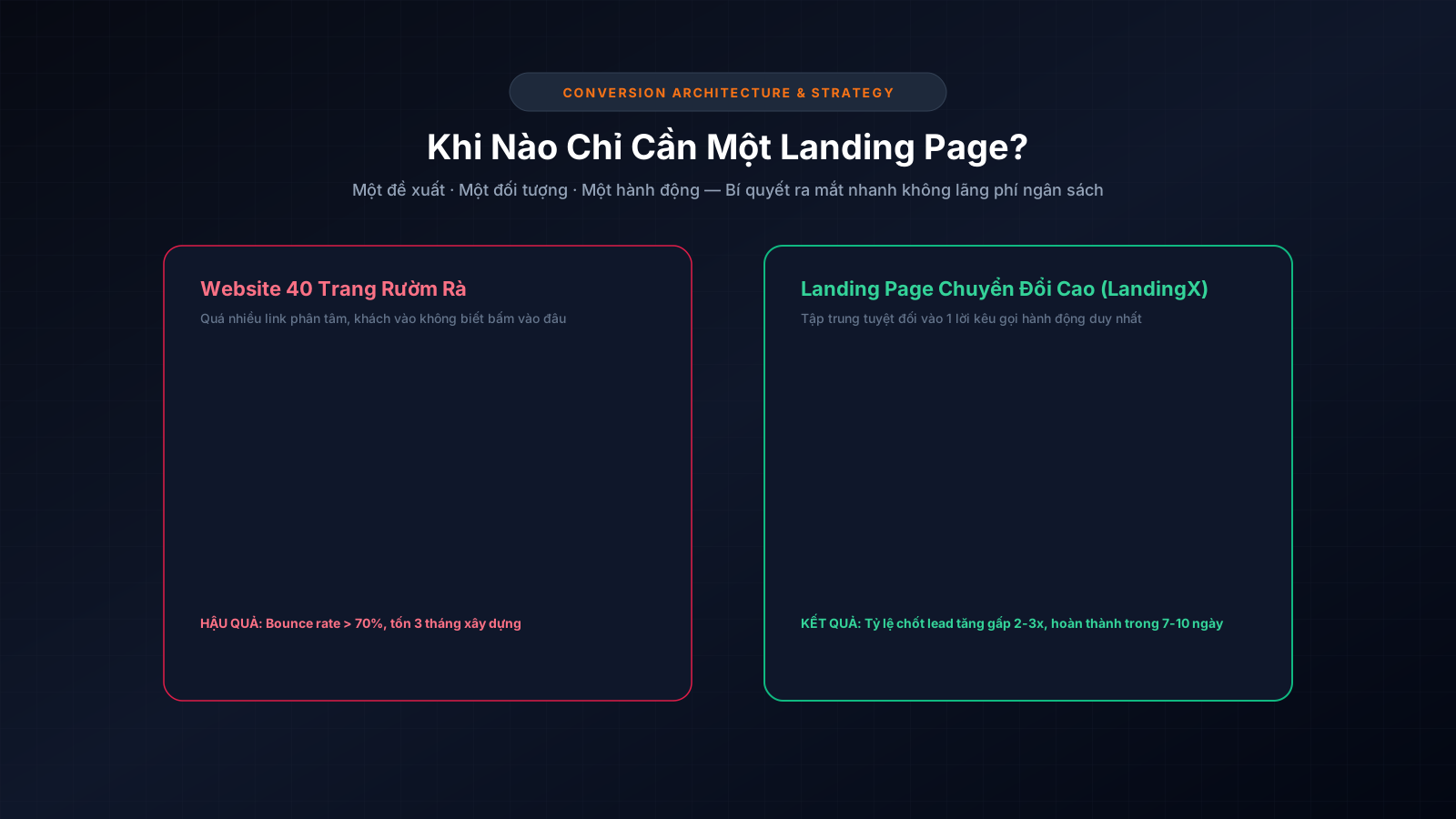
A company site can grow into dozens of pages. That does not mean it should start there.
When the goal is one offer, one audience, one action, a focused landing page usually outperforms a thin brochure site. Visitors know why they are here. You know what “success” looks like: a quote request, a call, or a demo.
In the B2B tech space, there is a dangerous misconception that credibility equals volume. Many founders and marketing teams believe that to look like a “real company,” they need a sprawling website from day one: an About Us page with a lengthy mission statement, a complex Services dropdown, a Blog with three placeholder posts, and a labyrinth of industry-specific subpages.
We see this pattern constantly. Teams spend four months arguing over the copy for the “Company History” page while their core product sits unvalidated in the market.
At MaxStack, we advocate for a different approach. Start small, validate fast, and layer complexity only when the business actually demands it.
The Anatomy of an Overblown First Project
When you decide to build a full Content Management System (CMS) before you have a clear go-to-market motion, you are fundamentally guessing. You are building infrastructure for content that does not exist yet and audiences you have not spoken to.
This usually leads to:
- Diluted Messaging: When you have 15 pages to fill, you start writing fluff. The core value proposition gets buried beneath corporate jargon.
- Delayed Launches: What should take two weeks to launch takes three months because stakeholders are paralyzed by endless design revisions on secondary pages.
- Maintenance Nightmares: You launch a WordPress site with 20 plugins to handle features you thought you’d need, only to spend the next year updating plugins to patch security vulnerabilities for features no one uses.
When is a Landing Page Enough?
A landing page is not just a cheap alternative to a website; it is a highly specific, conversion-focused tool. It strips away distractions (like global navigation menus) to force the user down a single narrative path.
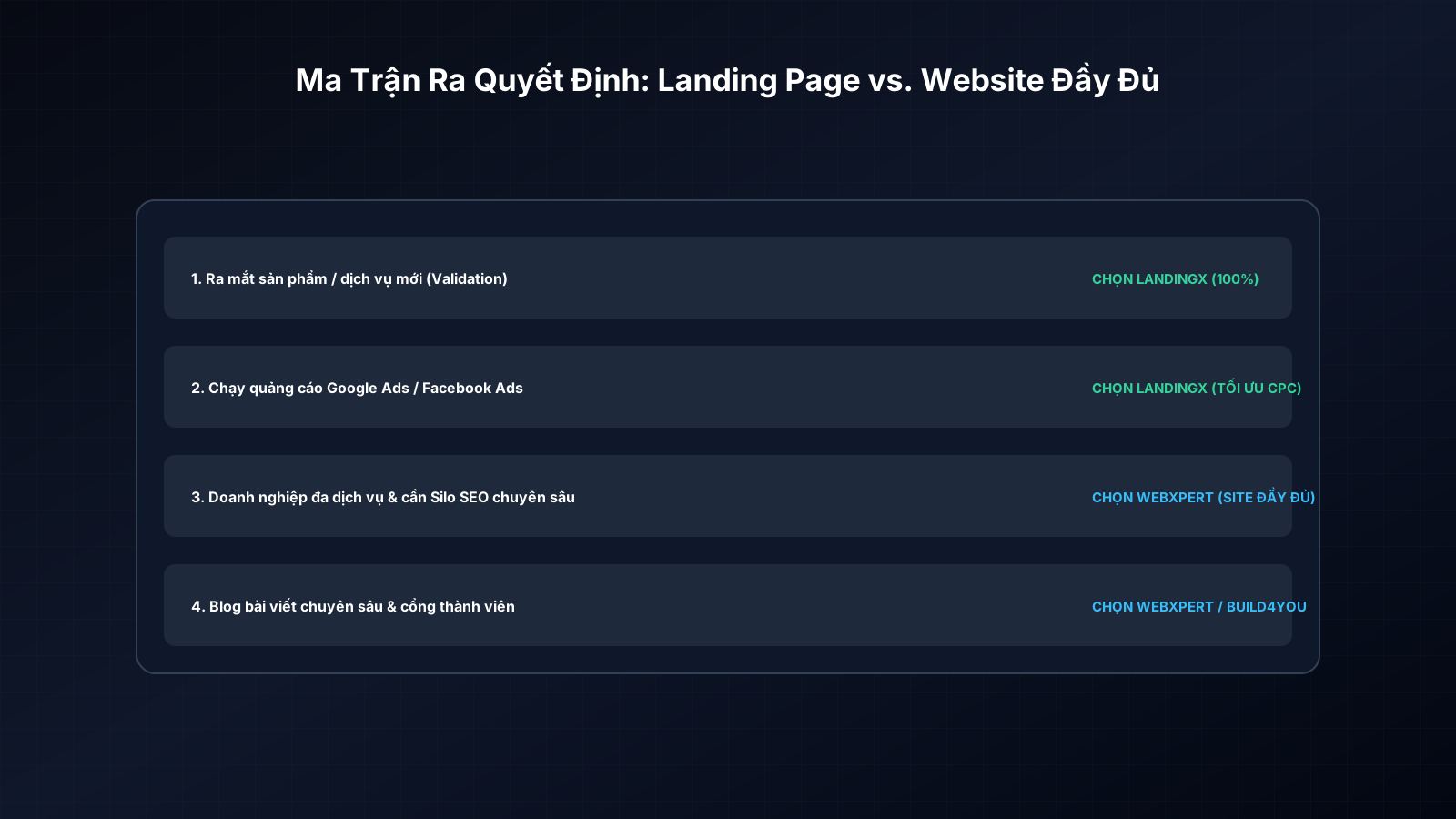
You should opt for a landing page when you are dealing with situational marketing. Here are the most common scenarios where a landing page is exactly what you need:
1. Validating a New B2B Offer
If your agency or SaaS startup is testing a new productized service, you don’t need a full website redesign. You need a single, high-performing page that articulates the pain point, explains the solution, shows social proof, and asks for an email or a demo booking. If the conversion rate is zero, you saved yourself three months of CMS development.
2. Event or Webinar Promotion
Events are transient. The page promoting them should be hyper-focused on the date, the speakers, the value of attending, and the registration form. Nothing else matters.
3. Paid Ad Campaigns (PPC)
Never send Google Ads or LinkedIn Ads traffic to your homepage. Your homepage is a map; a landing page is a guided tour. If you are paying $10 a click, you want that user to land on a page that exactly matches the intent of their search query, without letting them wander off into your “Careers” section.
What a Landing Page Must Answer
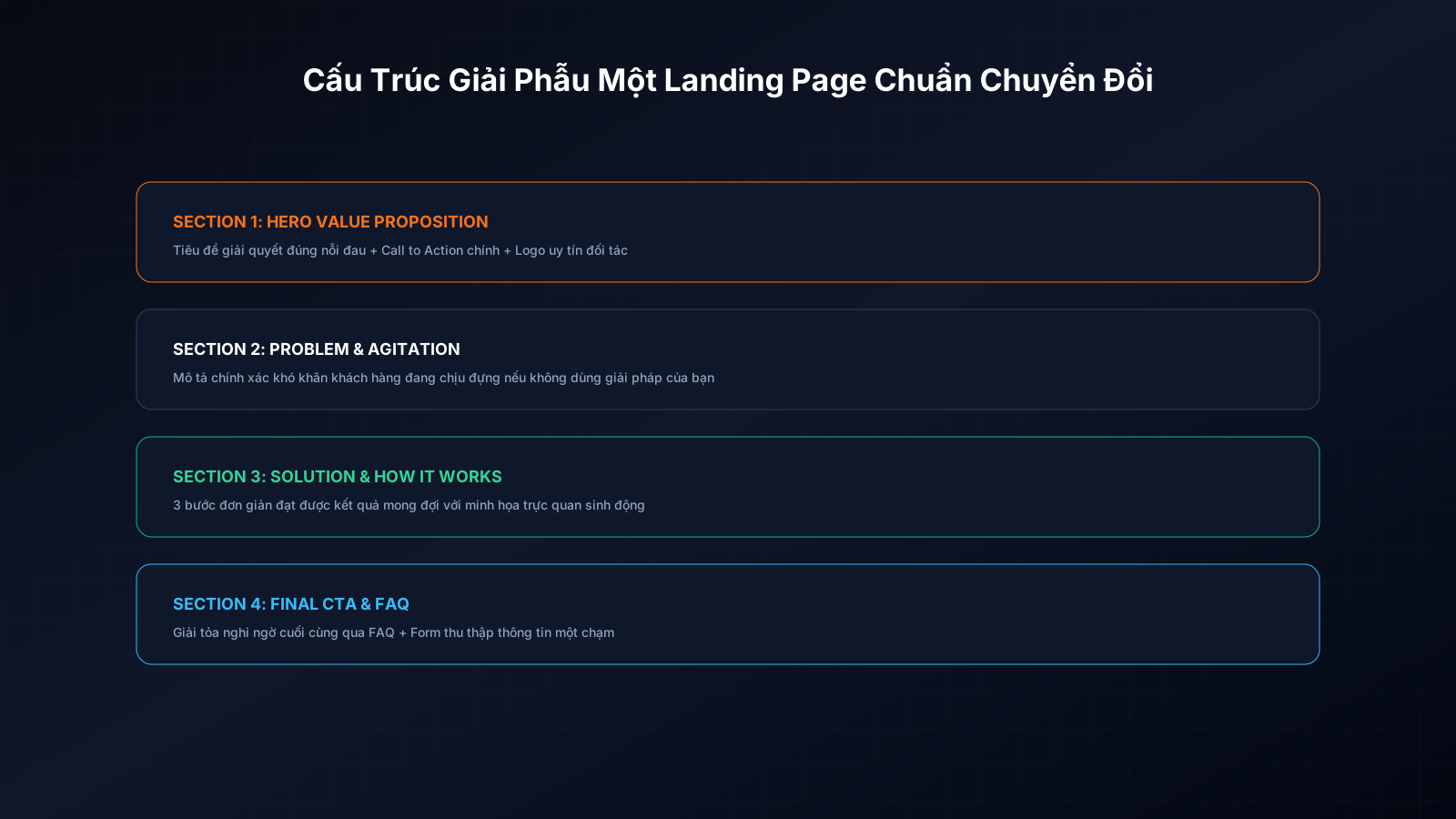
Use a landing page when you can answer three questions in one continuous scroll:
- Who this is for. (The precise target audience).
- What they get. (The concrete outcome, not the technical features).
- What to do next. (One primary button, not five competing links).
That is the exact job of LandingX: a conversion-first, hyper-fast introduction for a company or product. It is built on Astro to ensure zero layout shift, instant load times, and perfect SEO fundamentals, without the baggage of a database-driven CMS you have to feed forever.
Decision Matrix: Landing Page vs. Full CMS
Still unsure? Use this framework to decide your next move.
| Criteria | Landing Page (LandingX) | Full Website (WebXpert / WPPro) |
|---|---|---|
| Primary Goal | Lead generation, offer validation | Brand authority, organic discovery, complex information architecture |
| Traffic Source | Paid ads, outbound sales links, direct shares | Organic search (SEO), inbound marketing |
| Content Updates | Rare. Mostly A/B testing copy. | Frequent. Weekly blogs, case studies, news. |
| User Journey | Linear. Top to bottom to CTA. | Exploratory. Users navigate across multiple pages. |
| Time to Market | 1–3 weeks | 6–12 weeks |
| Maintenance | Near zero | Ongoing (CMS updates, database management) |
When it is not enough
Of course, landing pages have their limits. Choose a fuller website architecture when you already have proven demand and your business operations require:
- Complex Service Architectures: You offer multiple distinct services, each requiring its own dedicated story, case studies, and specific lead qualification forms.
- Content Marketing Engines: You have a dedicated marketing team that needs to publish weekly articles, resources, and whitepapers to build long-term SEO equity.
- Functional Portals: You need logged-in customer areas, heavy multilingual support, or integration with complex third-party CRM databases.
Those are later layers. Starting with them often delays launch and dilutes your first impression.
How We Sequence It at MaxStack
We listen first, then ship the smallest tech stack that can win the next 90 days.
If you come to us wanting a 40-page WordPress site to launch your new consultancy, we will likely push back. We will suggest building a high-converting LandingX page first. We will use it to capture your first 50 leads.
If the landing page works and the business grows, we don’t throw it away. Because we build with modern tools like Astro, that landing page easily becomes the foundation for your eventual full website. We add pages, integrate a headless CMS, or build custom software on purpose—because the business demands it, not because a $50 theme included twenty empty sections you felt obligated to fill.
Practical Checklist: Are you ready for just a landing page?
- I can explain my core offer in two sentences.
- I know exactly what action I want the user to take (Call, Form, Buy).
- I do not have time to write 10 pages of secondary content this week.
- I plan to drive traffic to this page actively (Outbound, Ads, Network).
If you checked most of those boxes, you don’t need a massive website project right now.
Ready to test your one great offer properly? Talk to us about LandingX today.

Comments & Discussion
0Your email address will not be published.
No comments yet. Be the first to share your perspective!