There is a painfully familiar script in enterprise software development:
A company decides to undergo a “full digital transformation.” Leadership signs an $80,000 contract with an agency promising: “This bespoke platform will handle everything — warehouse inventory, omni-channel CRM, role-based HR, AI attendance, and real-time financial reporting. Everything ships in a single turnkey release in nine months.”
Month three passes in requirement workshops. Month six vanishes in endless debates over database schemas and UI wireframes. By month nine, 85% of the capital is deployed, but when the CEO asks: “Can an operator open a screen and create a sample order today?”, the sheepish response is: “Backend is finalizing API endpoints, and DevOps is still provisioning the Kubernetes cluster.”
The initiative becomes a technology swamp. Nobody dares accept delivery, yet nobody can afford to cancel due to mounting sunk costs.
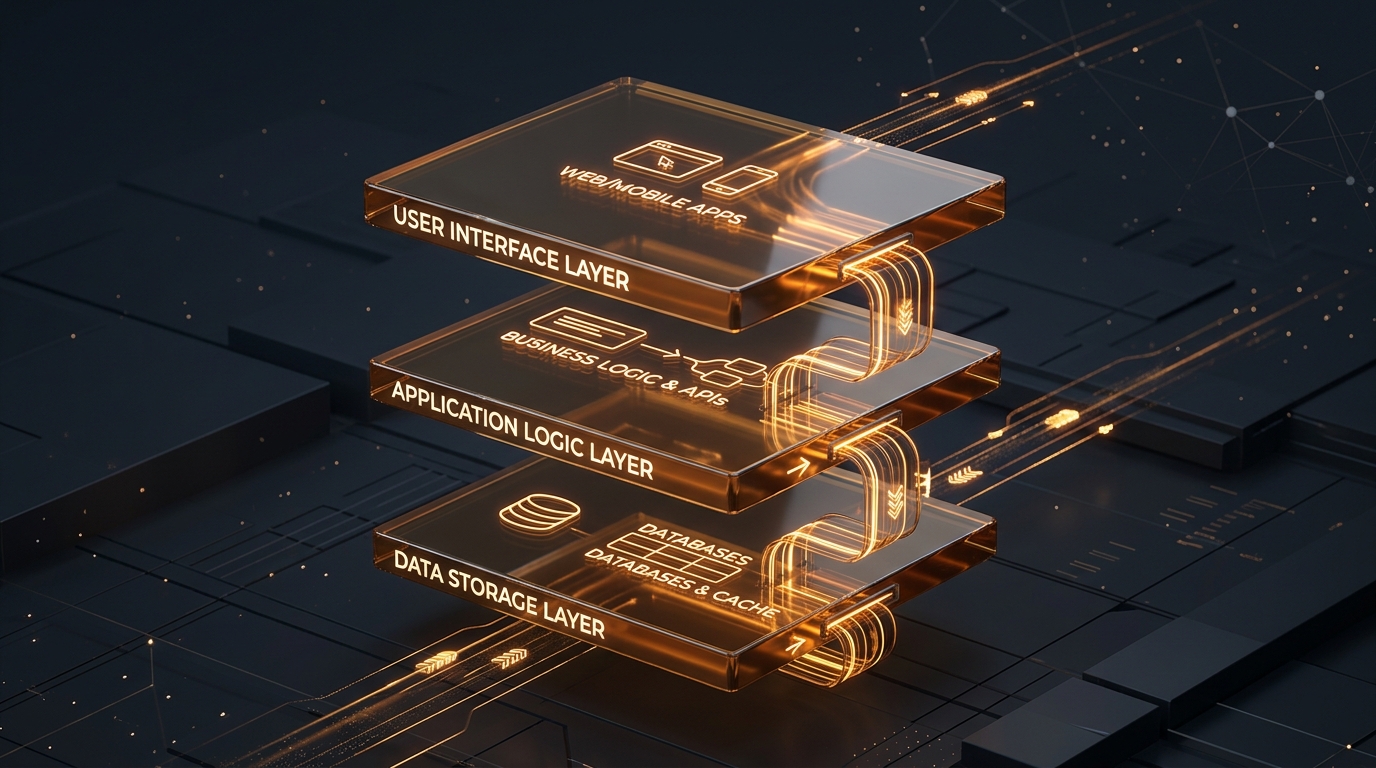
This is precisely why MaxStack was founded. MaxStack does not mean bloating your software with maximum technologies. Our foundational principle is: Stack in Layers — build the next durable layer that the business can run immediately, then build the layer that the previous one made obvious.
1. The Big Bang Release Fallacy
The “build everything at once” mentality sounds efficient on paper: bundle all features into a single contract, run one procurement cycle, train the company once, and cut the ceremonial ribbon.
In reality, software development does not behave like pouring a concrete foundation. A bridge blueprint is statically calculated once. In modern business, however, market dynamics, competitive pressures, customer behaviors, and internal workflows shift quarter over quarter.
When you attempt to drop a massive software system in a single release, you walk directly into three structural traps:
Trap 1: Interlocking Dependencies Paralyze Velocity
Designers wait for 50 finalized wireframes before handing off specs. Frontend engineers wait for 100 backend endpoints before integrating screens. QA teams refuse to test until the entire monolithic architecture is wired up. When a single link breaks (e.g., a payment gateway license gets delayed), all 99 other features sit idle.
Trap 2: Exponential Cost of Change
A business logic flaw discovered in week two costs two hours of whiteboarding to rectify. That same flaw discovered in month eight — when the flawed logic has propagated across ten services and database tables — costs tens of thousands of dollars and weeks of team demoralization to unwind.
Trap 3: Building on Unverified Speculation
You spend $30,000 building an elaborate customer analytics engine. When real staff begin using the software, you discover sales reps only ever use one feature: exporting a filtered phone list to Excel. 80% of your capital was incinerated on features that were never actually needed.
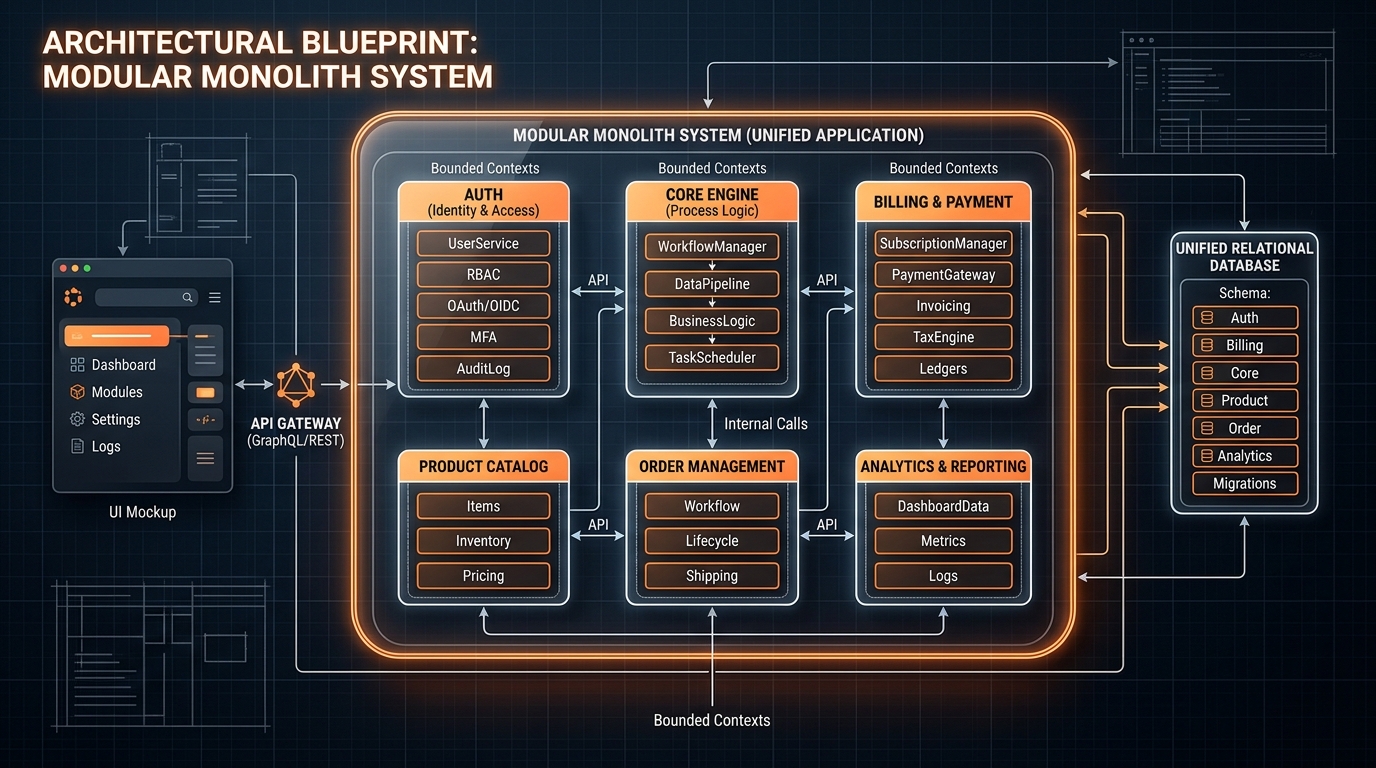 Figure 1: Clean layered Modular Monolith architecture for core operations (Core MVP).
2. Comparison: Big Bang Monolith vs. MaxStack’s “Stack in Layers”
| Evaluation Metric | Big Bang (All-in-One Drop) | MaxStack (Stack in Layers) |
|---|---|---|
| Time-to-Market | 6 to 12 months waiting for a first testable build | 3 to 6 weeks to ship a working, revenue-generating layer |
| Cashflow & Budget Risk | 100% of budget deployed before seeing ROI | Budget unlocked incrementally based on verified milestone value |
| User & Market Feedback | Based on speculative slide decks and assumptions | Driven by real user telemetry and live feedback loops |
| Bug & Integration Complexity | Severe spike when 10+ modules collide on Go-Live day | Isolated per layer; thoroughly regression-tested step-by-step |
| Adaptability to Market Shifts | Sluggish; changes risk breaking the entire system | Highly agile; earlier layers clarify requirements for next layers |
| Team Onboarding & Morale | Exhausted by overwhelming change management | Excited; mastering one crisp tool before layering the next |
3. The 4-Layer Execution Blueprint
When MaxStack partners with an enterprise, we never begin by handing you a 200-page specification document. We divide the software roadmap into four decoupled yet seamlessly complementary layers:
[ LAYER 4: SCALE, RESILIENCE & ADVANCED AUTOMATION ]
  └── AI Agents, Real-time BI, Load Optimization, Multi-region expansion
           ▲
[ LAYER 3: ENTERPRISE SYSTEMS OF RECORD & INTEGRATIONS ]
  └── Deep ERP sync, Inventory, Automated Accounting, Custom APIs (WebXpert / AdaptX)
           ▲
[ LAYER 2: CORE OPERATIONS ENGINE (LEAN MVP) ]
  └── Bespoke Web/Mobile app solving the single biggest business bottleneck (Build4You / MobileX)
           ▲
[ LAYER 1: BRAND PRESENCE & CONVERSION ENGINE ]
  └── Ultra-fast web front, Lead capture, Market demand verification (LandingX)
Layer 1: Brand Presence & Market Validation
Never build a complex backend infrastructure before verifying that the market demands your offer.
- Solution: LandingX — High-performance marketing sites engineered with modern static architecture (Astro, Tailwind, SSG).
- Outcome: Sub-second load times, perfect 100/100 Lighthouse scores, and live deployment in 1–2 weeks. You start capturing qualified leads and testing messaging with minimal upfront capital.
Layer 2: Core Operations Engine
Once leads arrive, where is your operational choke point? Dispatching field technicians? Processing bulk orders? Managing client onboarding?
- Solution: Build4You (Bespoke custom application development) or MobileX (Native/Cross-platform mobile apps).
- Outcome: We encapsulate only the 1–2 vital workflows driving 80% of business value. Your team receives a streamlined software tool running in production within month one.
Layer 3: Enterprise Integration & Systems of Record
When core business data is structured and flowing, we connect the dots across your ecosystem.
- Solution: WebXpert, TailorX, or custom Odoo extensions with AdaptX.
- Outcome: Real-time synchronization between sales, warehousing, and accounting. Because the underlying workflows are already stable, enterprise integrations land cleanly without operational disruption.
Layer 4: Quality Assurance & Long-Term Resilience
Rapidly evolving software accumulates latent defects and technical debt without rigorous independent verification.
- Solution: TestPro (Automated E2E, load, and security testing) and BugFix (Deep architectural audit and remediation).
- Outcome: Guaranteed system stability under 10x traffic surges, keeping codebases audit-ready for institutional investors and global expansion.
4. Real-World Case Study: How LogiSync Saved $52,000
Consider LogiSync, a mid-market freight logistics operator.
A traditional IT consultancy quoted $85,000 and a 10-month timeline to build an all-encompassing suite: customer portals, driver mobile apps, AI dispatch routing, and custom accounting.
Instead, LogiSync chose MaxStack’s Stack in Layers approach:
- Month 1 (Layer 1 - LandingX): ($3,000 investment). Shipped a client tracking portal allowing shippers to search consignments online. Inbound call center inquiry volume dropped 40% in two weeks.
- Months 2–3 (Layer 2 - Build4You & MobileX): ($16,000 investment). Built an intuitive driver app: scan QR code at pickup, capture digital proof-of-delivery (e-POD), and ping automated SMS updates. 60 drivers adopted the app in three days.
- Months 4–5 (Layer 3 - WebXpert): ($14,000 investment). Rather than wasting $25k on a speculative AI dispatch map (drivers were already happy using Google Maps), LogiSync discovered their true bottleneck was month-end invoice reconciliation. We engineered an automated invoicing and bank reconciliation module.
The Result: After 5 months, LogiSync owned a robust platform operating at full scale for $33,000 — saving $52,000 compared to the original agency quote. More importantly: they didn’t hold their breath for ten months. They generated revenue and cut operational costs starting in week four.
5. Three Golden Rules for CTOs and Business Leaders
[!IMPORTANT] 1. Enforce Loose Coupling Between Layers: Every software layer must stand on its own feet. If you decide to swap your payment provider or upgrade a front-end portal down the road, you replace a single layer without toppling the architecture.
[!TIP] 2. Implement Evidence-Based Budgeting: Never sign off on a massive budget for a feature you only assume users want. Deploy a lean layer first. If live usage data confirms traction, double down with conviction on the next layer.
[!NOTE] 3. Partner with Teams Who Say “No”: A great software partner is not someone who nods along to every requested feature just to inflate the contract scope. A great partner has the spine to tell you: “Do not build this feature yet. Ship Layer 1, talk to your users, and preserve your capital.”
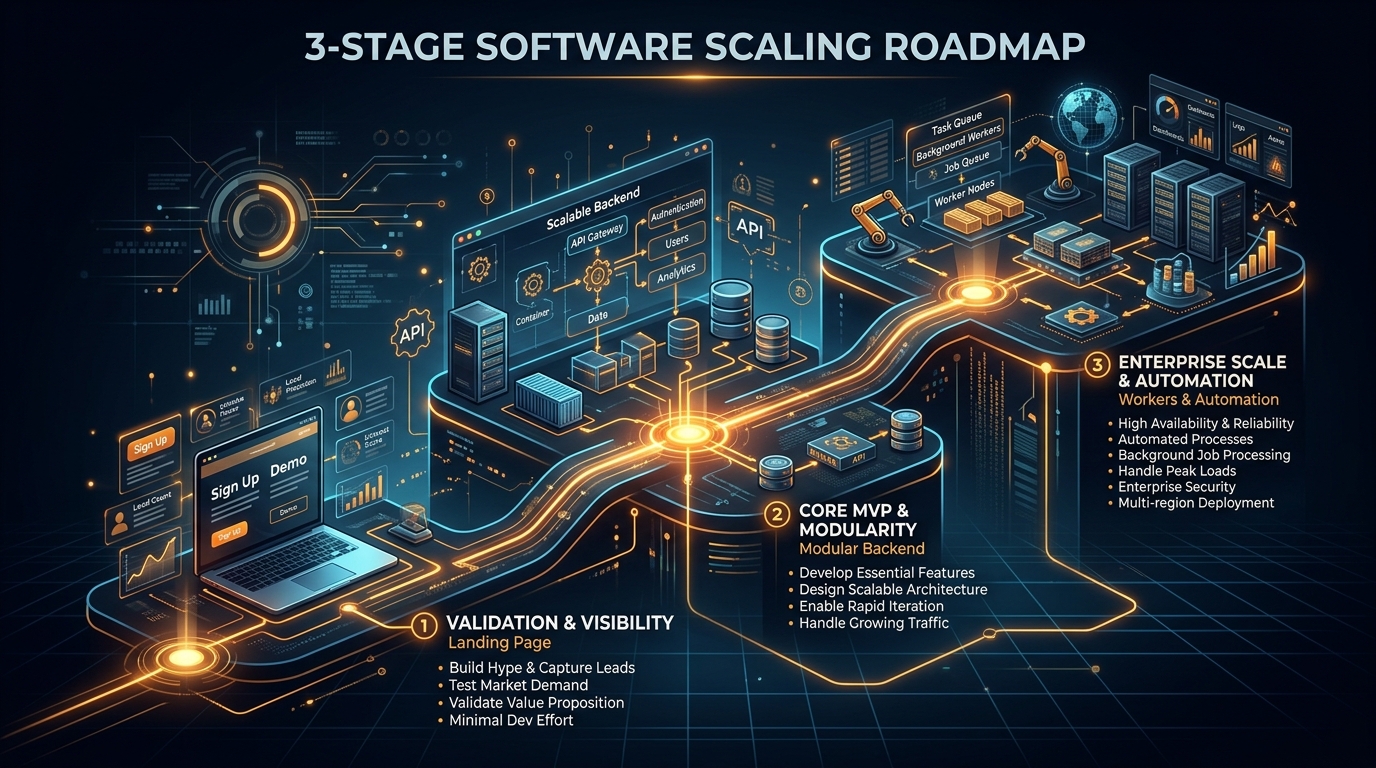 Figure 2: Architectural roadmap from market validation to enterprise scale.
Start with Your First Layer at MaxStack
At MaxStack, we refuse to sell vague, year-long “transformation” contracts that drag on without a concrete finish line.
Our engagement model is straightforward:
- We align on a measurable business outcome achievable in the next 30 days.
- We architect and ship the exact software layer that delivers that outcome.
- We evaluate operational feedback, and together we scope the next layer.
If you know your operational pain point but aren’t sure which tech stack fits — book a free 30-minute technical consultation with a MaxStack software architect. We speak in clear business metrics, not hollow tech jargon.

Comments & Discussion
0Your email address will not be published.
No comments yet. Be the first to share your perspective!