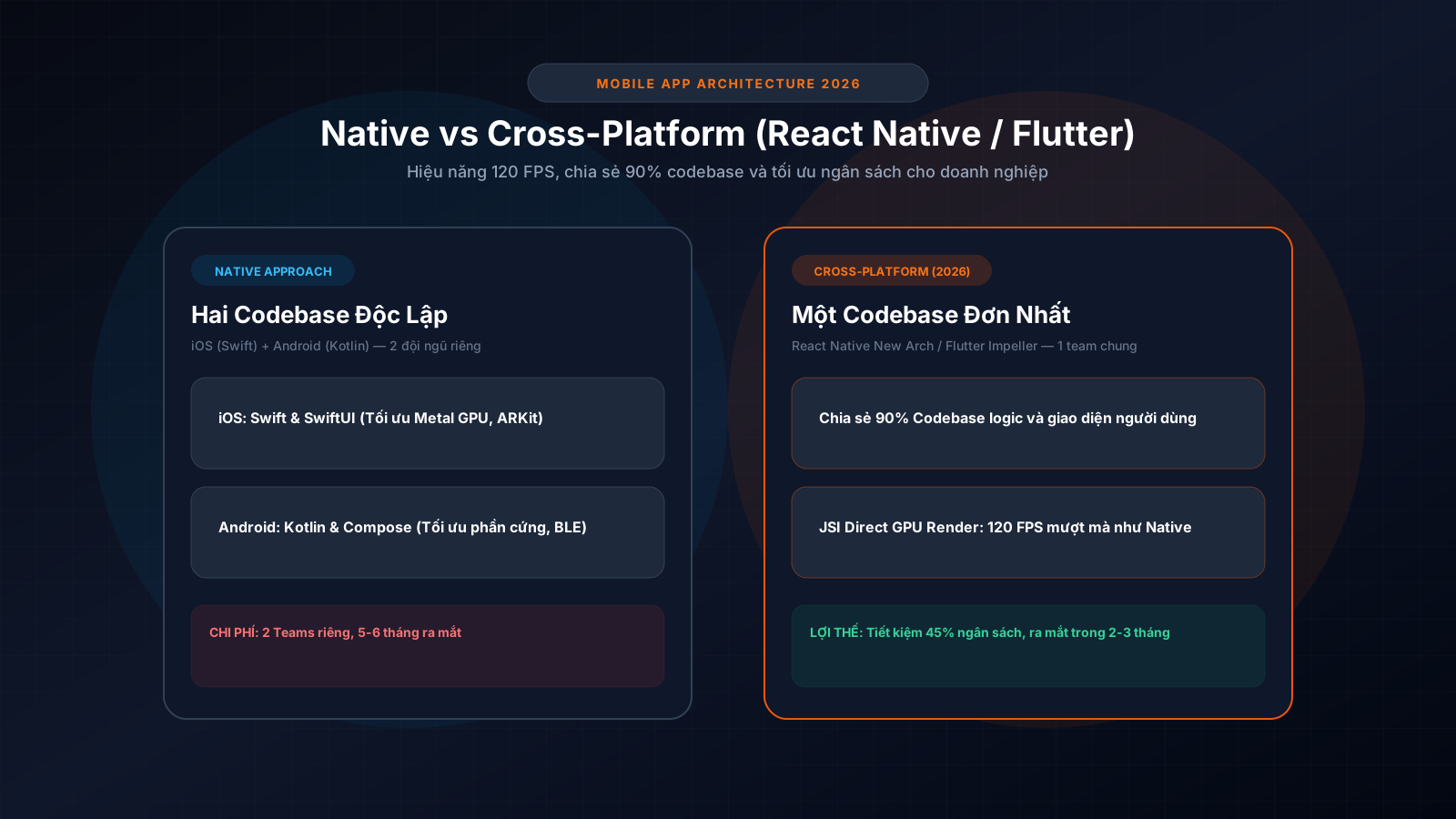
When commissioning a new mobile application, Chief Technology Officers (CTOs) and business leaders consistently face a crucial architectural decision: Should you build native apps (Swift for iOS, Kotlin for Android) or adopt a cross-platform framework (React Native or Flutter)?
A few years ago, this debate often ended in a reluctant compromise: choose cross-platform if you wanted to save money and launch quickly, but accept sacrifices in performance and user experience; or choose native if you wanted a premium, buttery-smooth app, but prepare to double your budget and development timeline. However, as we move through 2026, these long-held assumptions are largely obsolete. The aggressive evolution of underlying engines and compilers has fundamentally changed the equation. Modern enterprises need a pragmatic perspective, based on hard data and specific business scenarios rather than outdated engineering dogmas.
This article dissects the core technological shifts of 2026, exposes the hidden costs of native development that traditional agencies rarely mention, and provides a practical decision framework specifically tailored for B2B and SME organizations.
1. The Mobile Development Landscape in 2026: The Performance Gap is Closed
Historically, cross-platform frameworks carried a reputation for being sluggish, memory-hungry, and prone to clunky animations. In 2026, the paradigm has entirely shifted:
- React Native New Architecture: Since the official deprecation of the old async Bridge in favor of JSI (JavaScript Interface), React Native now allows synchronous, direct communication between JavaScript and native threads. Serialization bottlenecks are gone. This means that heavy operations—like scrolling through massive lists of thousands of e-commerce products or complex transaction histories—now achieve the exact same 60–120 FPS speed as pure native apps.
- Flutter Impeller: By replacing the legacy Skia rendering engine with Impeller, Flutter has completely eradicated the infamous “early-onset jank” (stuttering during the first render). By pre-compiling shaders rather than compiling them at runtime, Flutter currently delivers flawlessly smooth rendering on both iOS and Android.
- 95–98% Native Performance Parity: With these architectural overhauls, the naked eye of an end-user can no longer distinguish between an application written in Swift/Kotlin and one built with modern React Native/Flutter.
- Mature Hardware Integrations: Accessing native device capabilities is no longer a challenge. Camera feeds, deep background GPS tracking, Bluetooth Low Energy (BLE), biometrics (Face ID/Touch ID), and complex push notifications now function seamlessly via highly maintained, official SDKs.
2. The Hidden Costs of Native Development
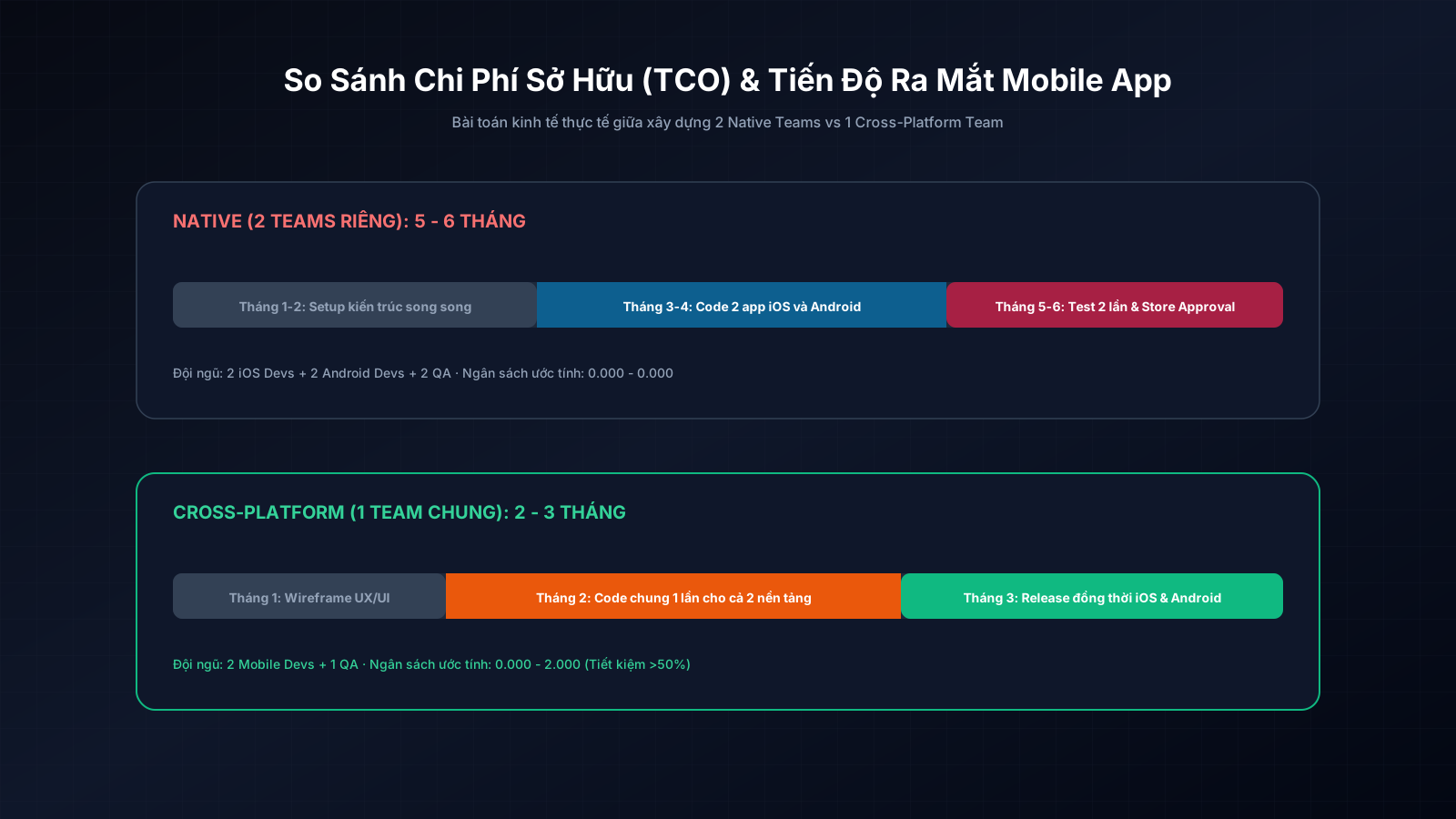
When development agencies provide quotes for native applications, they generally just multiply the cost by two (assuming one iOS team and one Android team). But in reality, the Total Cost of Ownership (TCO) for native apps is exponentially higher due to “invisible” operational overheads:
Separate QA and Testing Cycles
A cross-platform app usually requires one primary set of test cases and one main regression cycle across devices. With native development, you maintain two entirely distinct codebases. Bugs will manifest completely differently on iOS versus Android. Your Quality Assurance (QA) team must perform rigorous, independent regression testing for each platform. This effectively doubles the QA bottleneck before every single release.
Duplicated Release Pipelines
Deploying a new feature to production in a native environment demands two separate CI/CD (Continuous Integration/Continuous Deployment) pipelines. You have to manage two distinct sets of security certificates, two build processes, and carefully orchestrate the timing so both teams finish simultaneously. If the Android team completes a feature but the iOS team misses their deadline due to a platform-specific bug, the business feature is delayed for your entire user base.
Fragmented Crash Monitoring
When your application crashes in the real world, debugging two native platforms requires two different technical skill sets. An iOS engineer cannot easily decipher an Android stack trace to find the root cause, and vice versa. Cross-platform architectures centralize error reporting into a single codebase, drastically reducing the Mean Time to Resolution (MTTR) for critical bugs.
3. Multi-Dimensional Comparison: Native vs. Cross-Platform (2026 Edition)
Here is a macro-level comparison to help you evaluate the two approaches based on enterprise priorities:
| Criteria | Native (Swift / Kotlin) | Cross-Platform (React Native / Flutter) |
|---|---|---|
| Initial Development Cost | Very High (Requires 2 isolated engineering teams) | 40–50% Cost Savings (Single shared team) |
| Time-to-Market | 4 – 6 Months | 2 – 3 Months |
| Feature Maintenance | Duplicate engineering effort for every minor update | Synchronous feature releases across both stores |
| Deep Hardware Access | Maximum control (Vulkan/Metal, Custom USB drivers) | Excellent for 95% of standard business use cases |
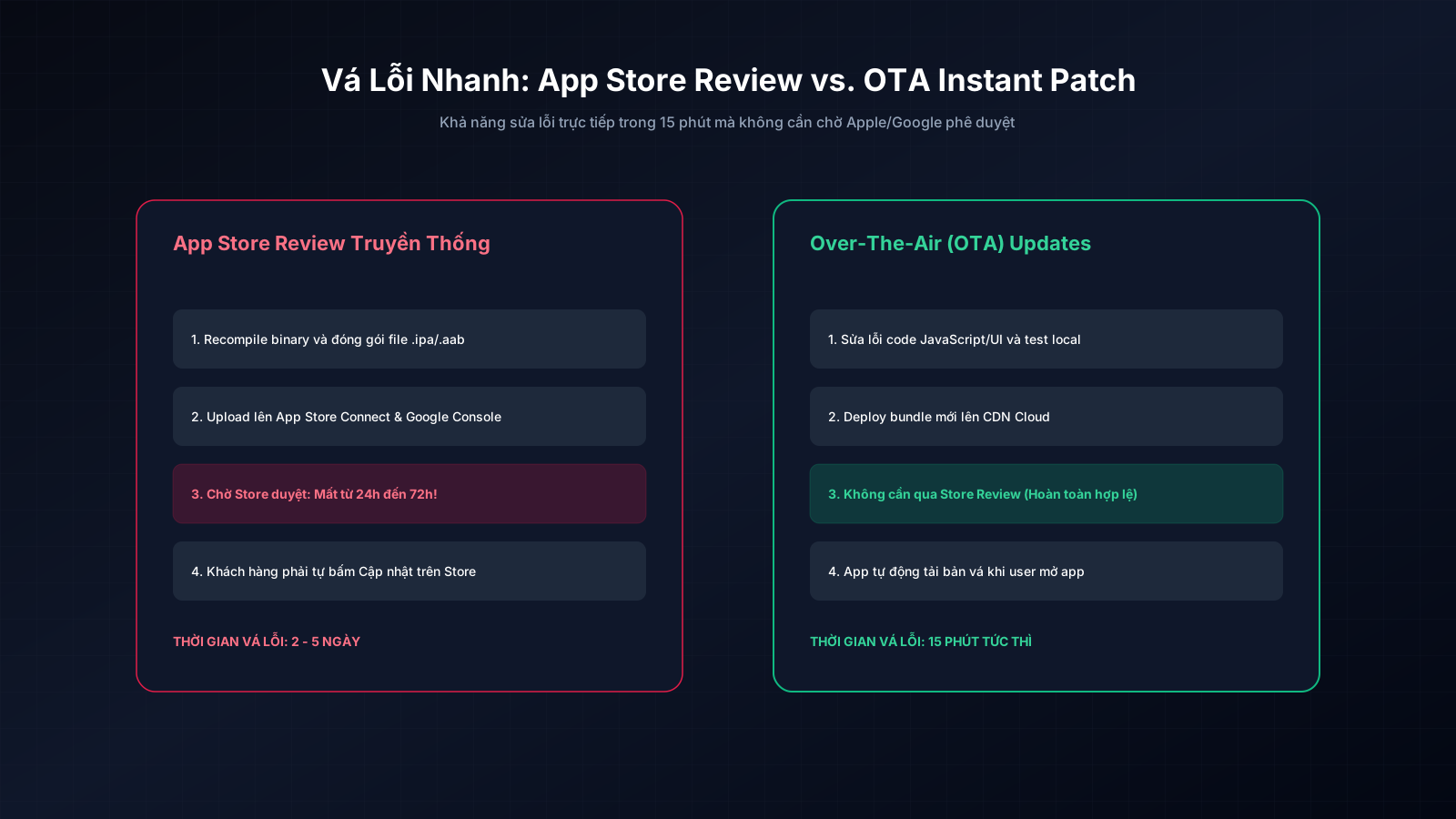
| Emergency Patches (OTA) | Must wait for Apple/Google app store review processes | Supports Over-The-Air (OTA) updates for urgent UI/logic fixes |
| Hiring & Handover | Requires recruiting highly specialized, expensive talent | Easier to staff (Especially React Native, given the massive JavaScript ecosystem) |
4. Analyzing Real-World B2B Scenarios
To make the right choice, you must contextualize the technology within your specific business operations. Here are real-world scenarios MaxStack frequently analyzes for enterprise clients:
Scenario 1: Field Sales Application
Characteristics: Sales representatives need to browse product catalogs, check inventory, verify GPS location for client check-ins, and create orders even when entirely offline (Offline-first architecture). Optimal Choice: Cross-Platform (React Native / Flutter) Reasoning: Features like GPS, barcode scanning, and local databases (SQLite/WatermelonDB) are exceptionally well-supported on cross-platform frameworks. Maintaining a single codebase allows the business to safely synchronize highly complex pricing, discount logic, and tax calculations across both operating systems without the risk of logic discrepancies between iOS and Android.
Scenario 2: Warehouse Management System (WMS)
Characteristics: Continuous rapid barcode scanning, local network integration with receipt printers via TCP/IP or Bluetooth, and displaying dense data grids. Often deployed on rugged, specialized Android scanning devices (e.g., Zebra, Honeywell). Optimal Choice: Cross-Platform (Flutter preferred) or Native Android Reasoning: If 100% of the warehouse staff uses rugged Android scanners, writing a pure Native Android app might offer the lowest latency for industrial hardware communication. However, if management also requires dashboard access on their personal iPads and iPhones, Flutter becomes the perfect choice due to its highly consistent UI rendering engine across any screen size or form factor.
Scenario 3: B2C E-Commerce Application
Characteristics: Requires visually stunning interfaces, fluid animations, integration with multiple regional payment gateways, rapid page load times, and constant UI tweaks to accommodate flash sales and marketing campaigns. Optimal Choice: Cross-Platform (React Native) Reasoning: React Native is the undisputed king of e-commerce mobile development (extensively used by giants like Shopify). The ability to share UI components with web teams, easily integrate localized payment SDKs, and push instant UI updates without app store delays makes it an irreplaceable asset for retail.
5. App Store Approval Timelines and the OTA Advantage
One of the most profound operational pain points of mobile development is the bureaucratic review process of the Apple App Store and Google Play Store.
With Native Apps, if you discover a critical logic flaw that prevents users from checking out, or if you simply need to change a button color for tomorrow’s marketing campaign, you are forced to compile a new build, submit it to the stores, and pray Apple reviews it within 24–48 hours. Occasionally, apps are rejected for vague guidelines, completely derailing product launch schedules.
With Cross-Platform (specifically React Native), you unlock the power of Over-The-Air (OTA) Updates (via tools like Microsoft CodePush or Expo Updates). This technology allows you to push JavaScript logic and UI changes directly to the users’ devices while they are using the app.
- Emergency Hotfixes: Deploy critical patches in 5 minutes, completely bypassing Apple/Google review.
- A/B Testing: Dynamically swap UI flows to test conversion rates with zero friction.
- Business Continuity: Minimize revenue loss caused by prolonged app downtime.
Note: OTA updates are strictly for JavaScript logic and UI changes. If you need to add new native capabilities (like a new native Bluetooth SDK), a full app store release is still required.
6. Decision Framework for CTOs and Executives
Before writing a single line of code, gather your management team and answer these 5 critical questions. This is the exact audit MaxStack uses to prevent clients from burning capital:
- Does the core value of our app rely on pushing the absolute limits of hardware or 3D graphics?
- If YES (3D gaming, AR/VR, proprietary medical device drivers): Choose Native.
- If NO: Proceed to Question 2.
- Are budget optimization and Time-to-Market critical to our current business phase?
- If YES (Startups needing rapid validation, enterprises rushing a new MVP): Cross-platform is mandatory.
- What expertise does our current in-house engineering team possess?
- If you have a strong Web Frontend team (React/Vue): React Native is the most natural, frictionless transition.
- If you are hiring from scratch or outsourcing: Either Flutter or React Native is excellent.
- How frequently do we plan to update features or change the UI?
- Weekly/Daily iterations: Prioritize cross-platform with OTA capabilities (React Native).
- Quarterly updates: Either approach works.
- Does the app require complex offline data synchronization?
- Both handle this well, but cross-platform ensures you only have to write and maintain complex offline syncing logic once for both platforms.
7. Conclusion: Making the Final Call
In 2026, Cross-Platform is no longer a temporary workaround or a cheap compromise. It has solidified its position as the industry standard for over 90% of standard B2B and B2C applications. Stubbornly insisting on Native development for standard sales, operations, or HR management apps provides zero tangible value to the end-user. Instead, it unnecessarily drains IT budgets and slows down your organization’s agility.
Reserve Native development strictly for applications that demand the lowest-level hardware manipulation a mobile device can offer.
Ship your mobile vision with MobileX
At MaxStack, we understand that selecting a programming language is merely the first step. Through our MobileX service, we partner with enterprises throughout the entire product lifecycle—from UX/UI wireframing and robust Design Systems to ensuring a flawless launch on the Apple App Store and Google Play.
- Clean Architecture: We write modular code guaranteed to remain maintainable and scalable 3–5 years down the line.
- Offline-First Excellence: Ensuring your workforce remains productive even in zero-connectivity environments.
- Enterprise-Grade Processes: We provide code warranties and commit to regular maintenance updates for upcoming iOS and Android major releases.
Planning a new mobile app for your business but unsure about the technical roadmap? Consult with our engineering team for architectural advice and a detailed cost estimate. Our architects speak the language of business, not just code.

Comments & Discussion
0Your email address will not be published.
No comments yet. Be the first to share your perspective!