
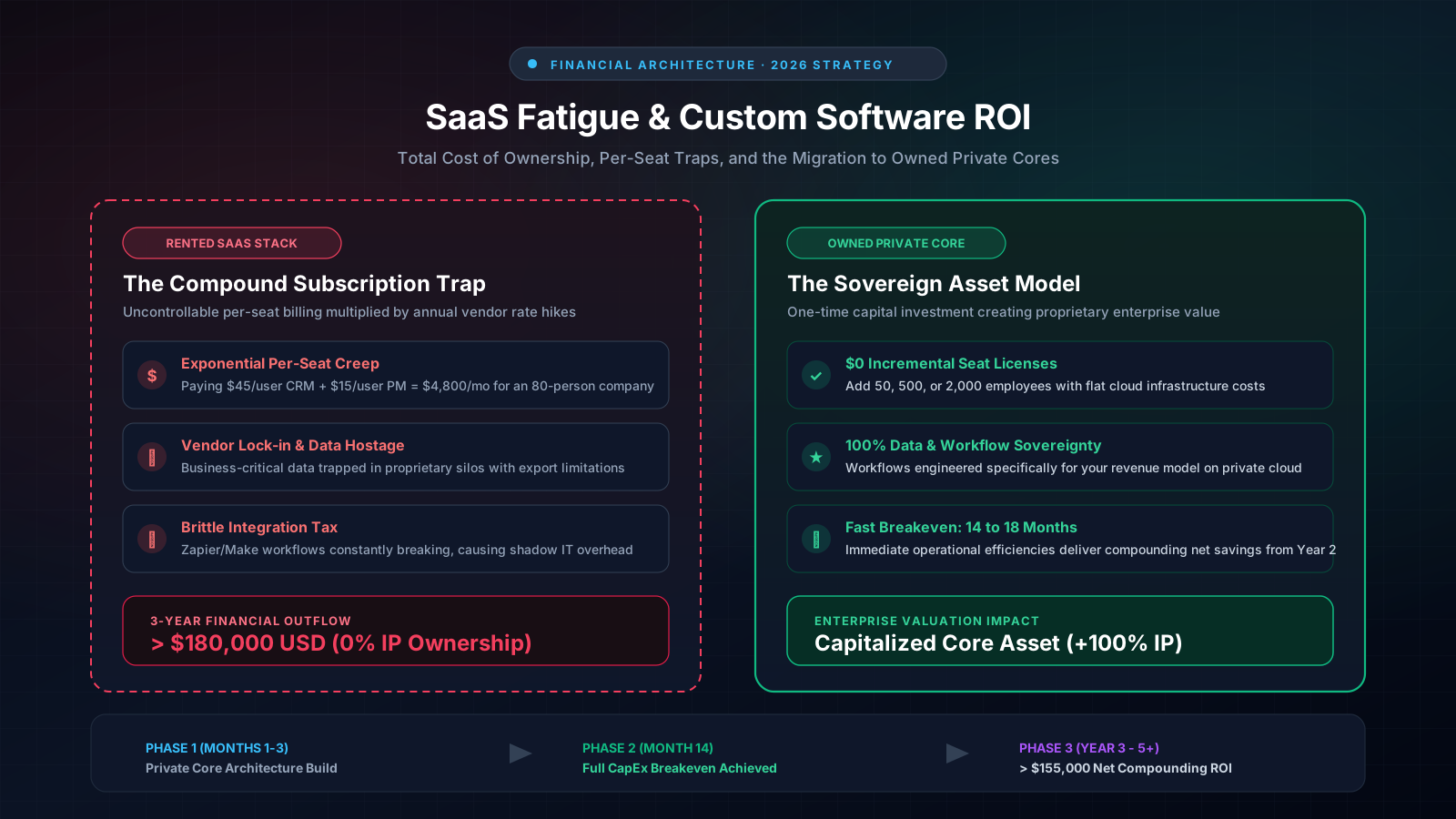
Take a look at your company’s credit card statements from last month and count how many active SaaS subscriptions you are paying for.
A project management tool: $15/seat/month.
A customer relationship manager: $45/seat/month.
Add HR tracking, internal chat, document storage, automated email flows, and invoicing tools…
And then comes the inevitable email from your software vendor: “To enhance your experience with our new AI capabilities (which you rarely use), pricing will increase by 25% starting next quarter.”
Welcome to SaaS Fatigue — the operational bottleneck forcing CFOs, CEOs, and CTOs globally to re-evaluate their software investment thesis.
1. The Per-Seat Subscription Trap
Software-as-a-Service democratized enterprise software by eliminating physical server procurement and heavy upfront IT overhead.
Yet after a decade of compounding adoption, SaaS convenience has morphed into an escalating operational tax:
- Exponential Per-Seat Creep: When your headcount grows from 20 to 100, your software overhead does not scale linearly — it surges. You pay full monthly licenses for staff members who log into the portal twice a month.
- Data Fragmentation & Integration Tax: Customer records live in CRM A, financial transactions in accounting tool B, and service tickets in tool C. Connecting them requires external integration connectors that also bill by sync volume.
- Vendor Lock-in Vulnerability: When proprietary workflows are tied to closed ecosystems, migrating off becomes prohibitively disruptive and expensive.
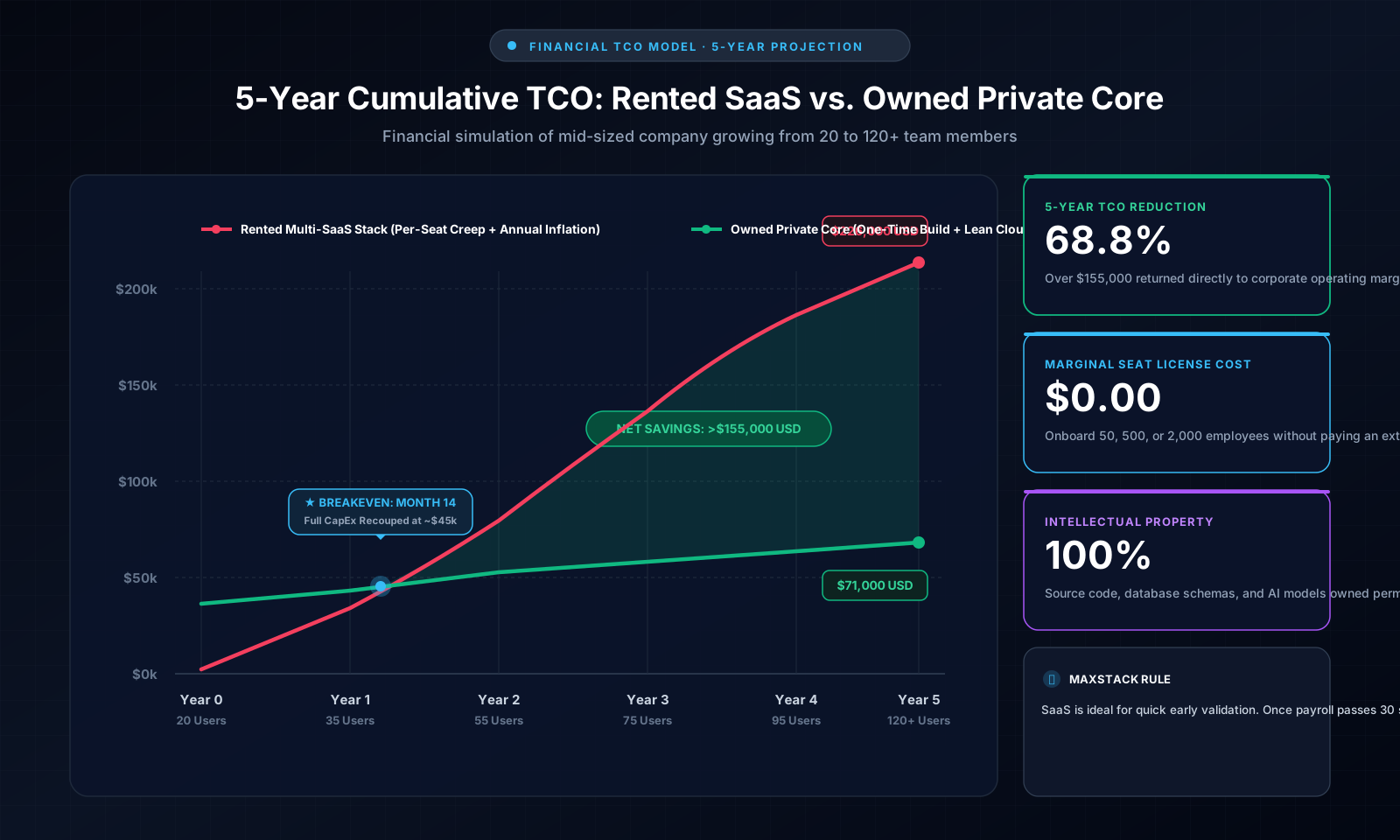 Figure 1: 5-year cumulative TCO financial projection — Breakeven reached at Month 14, unlocking >$155,000 USD net savings as the team grows from 20 to 120+ members.
2. The 2026 Paradigm Shift: Owned Private Cores & Agile Custom Tools
Enterprises are prioritizing SaaS Rationalization. Instead of licensing standalone point solutions indiscriminately, forward-thinking organizations deploy a Two-Tier Architecture:
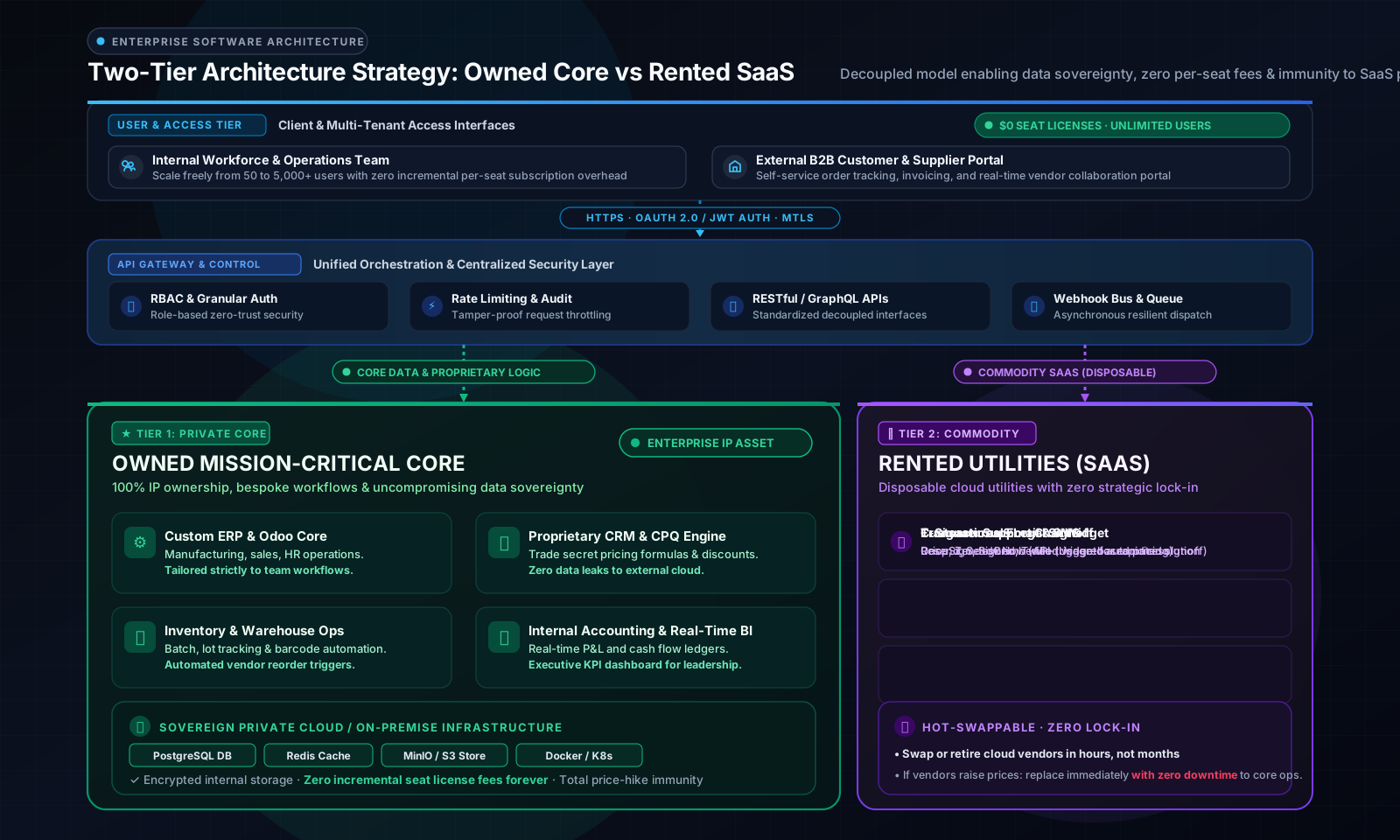 Figure 2: Two-tier enterprise architectural blueprint — Strict decoupling between proprietary core assets and disposable commodity utilities.
Why Owned Cores Win on Total Cost of Ownership (TCO)
- Eliminate Per-Seat Multipliers: Building a unified custom portal or leveraging open core ERP means you can provision 50, 500, or 5,000 internal accounts with zero incremental software licensing costs.
- 100% Fit with Business Logic: Instead of contorting internal operations to match rigid off-the-shelf software workflows, custom software is crafted around how your business actually generates revenue.
- Uncompromised Data Sovereignty: Proprietary pricing matrices, customer histories, and audit trails remain encrypted on your private infrastructure, insulated from unilateral policy shifts.
3. The ROI Calculation: Build vs. Rent
Consider a mid-sized enterprise with 80 active users:
- Fragmented SaaS Suite: ~$3,200/month ➔ $38,400/year (excluding 10-15% annual vendor price hikes). Over 3 years, you expend more than $120,000 with zero intellectual property ownership.
- MaxStack Owned Core Solution: A one-time capital investment paired with lean cloud infrastructure maintenance. Most implementations reach breakeven within 14 to 18 months, returning recurring savings directly back to bottom-line profitability.
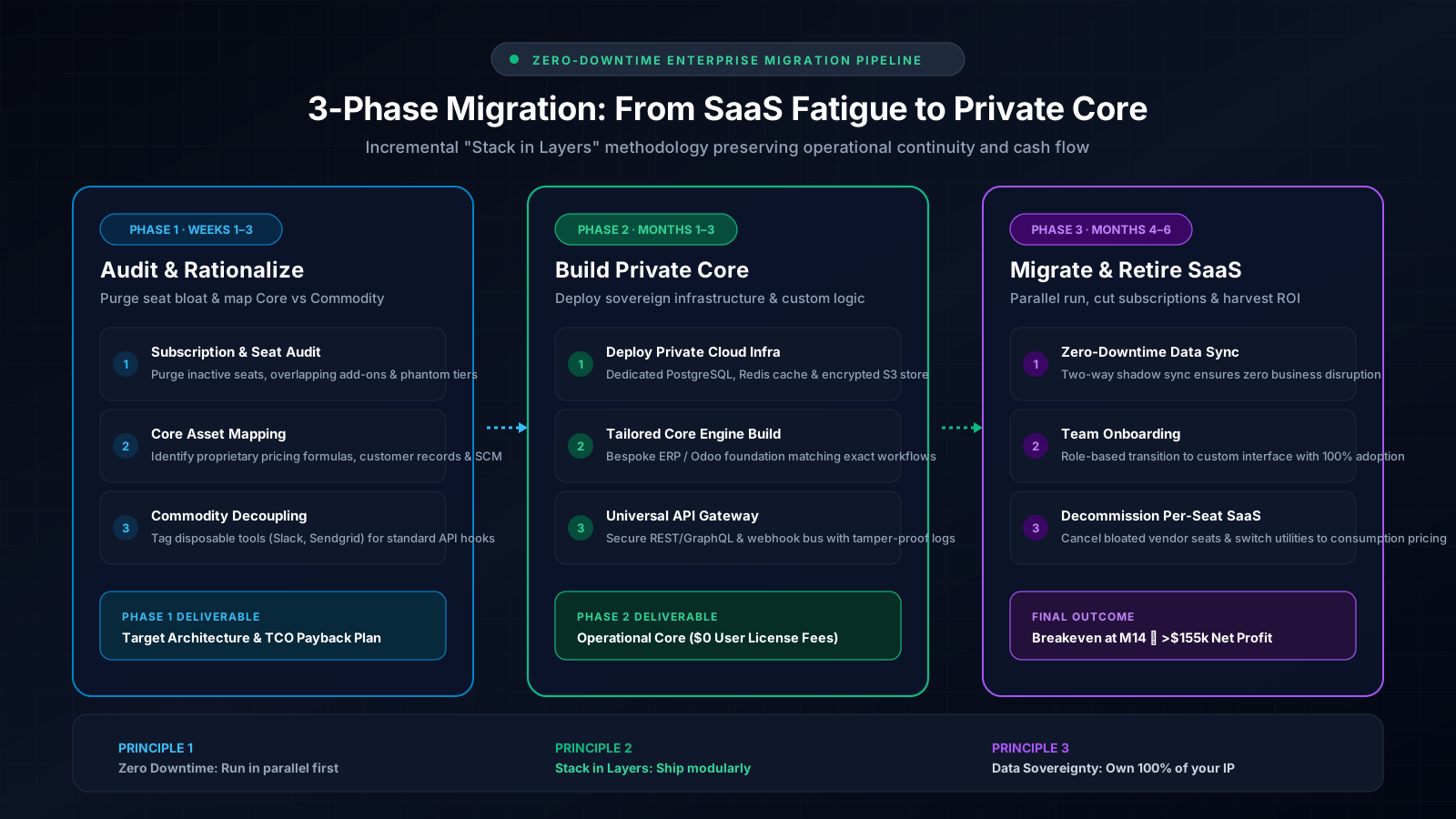 Figure 3: Three-phase migration roadmap — Auditing phantom seats, deploying private infrastructure, and gracefully retiring per-seat subscriptions.
Reclaim Operational Control with MaxStack
At MaxStack, we do not advocate abandoning SaaS blindly. We empower businesses to stop overpaying for generic commoditized workflows.
With specialized capabilities across Custom Software Development and open enterprise platforms (Odoo ERP, custom portals, high-performance microservices):
- We audit your active software stack to identify costly operational redundancies;
- We engineer custom, scalable core platforms that belong entirely to your enterprise.
Evaluate whether your business is paying an unnecessary SaaS premium. Request a comprehensive TCO and software rationalization review from MaxStack engineers:
👉 Schedule a Software Assessment

Comments & Discussion
0Your email address will not be published.
No comments yet. Be the first to share your perspective!